
Lenire
A prescription device that pairs sound through headphones with mild pulses on the tongue, used at home once an audiologist prescribes it.
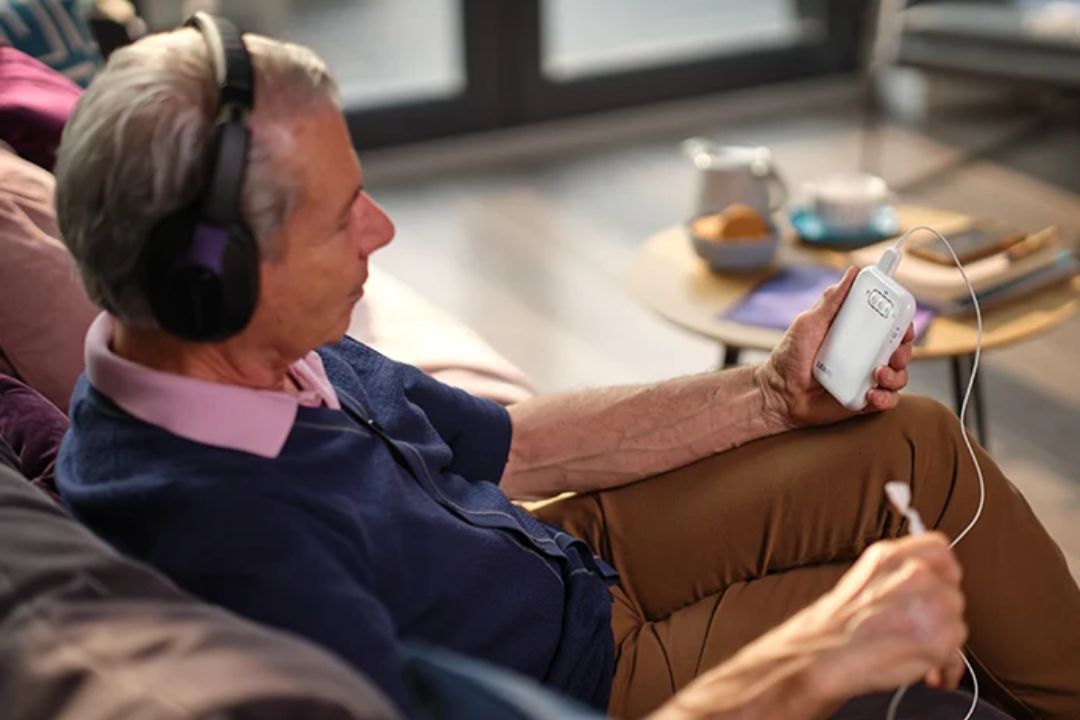
How does Lenire work?
Lenire combines two gentle signals at once. You listen to sound through wireless headphones while a soft tip rests on your tongue and delivers mild electrical pulses, and a small handheld controller lets you adjust the settings during a session. Using the two signals together is called bimodal neuromodulation, which simply means reaching the brain through two senses at the same time.
It is designed to reduce how much tinnitus intrudes on your day, rather than to change your hearing. Sessions happen at home on your own schedule, and your audiologist sets the device up with you and follows how it is going.
Who is Lenire for?
The US authorization covers adults aged 18 and over whose tinnitus is at least moderate. Your clinic measures that with the Tinnitus Handicap Inventory, a short questionnaire about how the sound shows up in your day, so the first visit tells you whether Lenire is an option for you.
The authorized wording says the device is for temporarily relieving tinnitus symptoms, which is honest and worth knowing as you weigh it up. Your clinician can talk through what that has looked like for their patients over time.
What does the evidence say?
Every treatment page on Tinnitus Support lays out the evidence the same way, so you can compare options on an even footing.
The studies
The trial behind the authorization from the US Food and Drug Administration (FDA) is called TENT-A3. It followed 112 people at three sites in Belgium, Germany, and Ireland, who used sound therapy alone for six weeks and then added the tongue stimulation for six weeks. Two earlier trials from the same research team, called TENT-A1 and TENT-A2, reported improvements in tinnitus scores as well. Those two trials sat outside the FDA submission.
What was found
Among participants with moderate or worse tinnitus, most reported a meaningful improvement in their score after adding the tongue stimulation, measured with a questionnaire called the Tinnitus Handicap Inventory.
The figures the maker publishes come from participants who used the device as directed, and your audiologist can talk you through what they mean for you.
Regulatory status
The FDA granted Lenire De Novo classification on 6 March 2023, creating a new device category for combined sound and electrical stimulation for the relief of tinnitus. It was the first device of its kind to be granted De Novo classification, and it is available by prescription.
Worth knowing
The authorized indication is for temporarily relieving tinnitus symptoms in adults with at least moderate tinnitus. Results in the trial came from that group, so they say the most about people in a similar situation.
The evidence for Lenire comes from its own trials, since current tinnitus guidelines have yet to rate this type of device.
Sources. FDA De Novo decision DEN210033, and the TENT-A3 trial publication in Nature Communications, 2024.
Last reviewed September 2026
Lenire FAQs
Do I need a prescription?
Yes. Lenire is a prescription device, so treatment starts with an assessment by an audiologist or tinnitus specialist.
Will it make the sound go away?
Lenire is intended to reduce how much tinnitus affects you, rather than to switch the sound off. In its main trial, most participants with moderate or worse tinnitus reported a meaningful improvement in their score after adding the tongue stimulation.
Where do the sessions happen?
At home, on your own schedule. Your clinic sets the device up with you first and follows how the course is going between visits.
How long are the sessions?
You use Lenire for two 30-minute sessions a day, for a length of time your clinician decides. You go back partway through so your provider can review how it is going and adjust the settings.
Ready to talk it through?
Clinics listed on Tinnitus Support that offer Lenire can take you through the assessment and what a course would look like for you.
This page is for general information about tinnitus treatments. It does not replace advice from an audiologist or doctor who has assessed your hearing. Treatment suitability and results vary from person to person.
Published September 2026 · Last reviewed September 2026